
Business / 22 Oct 2026
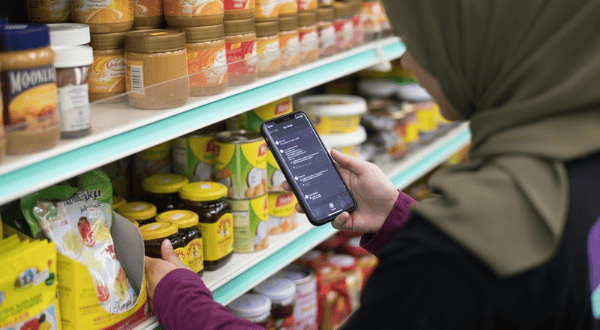
This is probably one of the most common questions we get from businesses considering flexible workers.
And it’s a fair question.
When you’re running a business, you need people to show up on time, understand what needs to be done, and complete the work properly. Whether someone is full-time, part-time or a gig worker, the expectation shouldn’t be any different.
But here’s something I’ve learnt from running GoGet over the years. Reliability doesn’t just come from finding good people. A lot of it comes from building the right systems around them.
Making training compulsory before GoGetters can take on certain job types has been one of the pivotal points in empowering performance. For delivery type jobs, this includes understanding how to handle goods, what photos need to be taken, and what to do when something goes wrong. For part time jobs, this includes knowing what good service looks like, how to ask for help and how to prepare for the first day.
For GoGetters who have had performance issues, we can also require them to go through training again.
I think sometimes we underestimate how important it is to simply communicate expectations before someone starts working. Businesses play a part in this and it is always a two way street. Most of the time, “poor performance” can be avoided if we clearly share what “good performance” looks like. It is as simple as that.
We have written before about why businesses end up retraining the same part-time roles over and over, and how to stop. Read that here.
We’ve integrated the ‘right thing’ as part of the flow within the GoGetter app so that instructions are available at the point of work.
For example, when picking up or dropping off an item, the app guides GoGetters on what they need to do and what proof they need to capture.
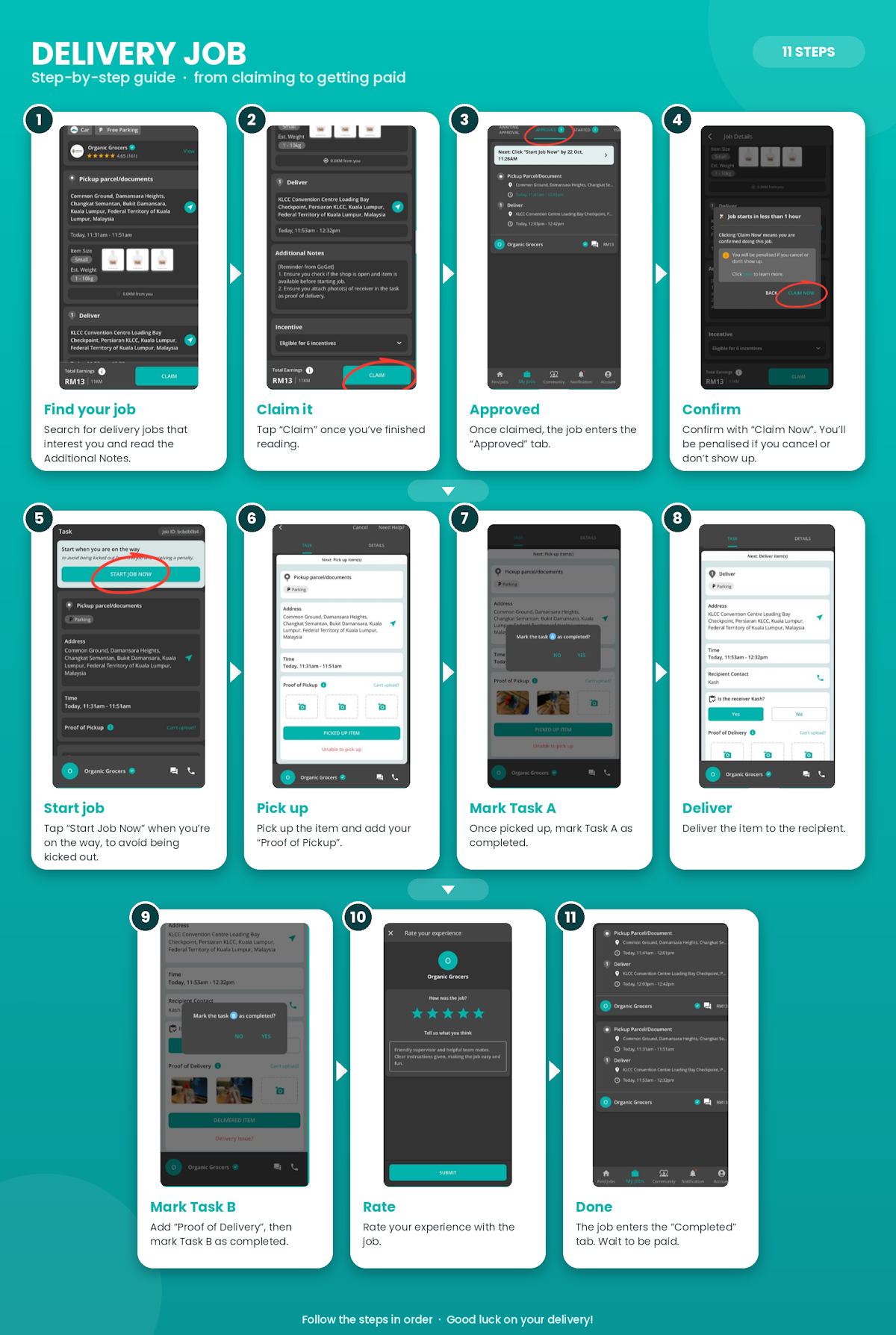
We’ve also tightened our proof-of-delivery requirements. Proof of delivery means the photo and confirmation that shows an item reached the right person.
It’s a small change in the workflow, but it makes a big difference when something goes wrong and both parties need to understand what actually happened.
At GoGet, our experienced GoGetters — those with 50 or more hours on the platform and a job completion rate above 90% — turn up 93% of the time. GoGetters have a view of their completion rate which is the rate of which the part timer shows up and completes the job they take up. As a platform, we must strive for transparency and empower through data and let our community self incentivise based on their motivation to keep a good record.
That’s encouraging, but we know there’s still room to improve.
We’ve also seen what happens when a trained pool stays together. For one beverage brand, 142 trained GoGetters covered 433 shifts across 57 locations in Klang Valley and Penang.
The goal is to continuously identify reliable GoGetters, reward good performance, and take action when standards are not met.
Because even with training, better technology and clearer accountability, mistakes can still happen.
We’ve been reviewing our damaged goods policies and how we support businesses when incidents happen.
Where goods are damaged or lost, compensation is available up to RM400 for business accounts and RM100 for personal accounts. Report it quickly, with clear photos, the job details and the invoice for the item, and our team can assess it properly.
But something I also want to highlight is the importance of businesses reporting issues through the proper channels.
If a GoGetter does a great job, rate them! This helps us recognise and surface good workers.
If something goes wrong, report it. Whether it’s poor attitude, dishonesty, damaged goods or someone not following instructions, these reports help us identify patterns and take action.
Without that feedback, it’s much harder for us to improve the quality of the workforce for everyone.
There is now a formal route on the worker side too. The Gig Workers Act came into force on 31 March 2026. Under it, gig workers can raise complaints about payment, account suspension or a breach of their agreement.
And I think there’s also a responsibility on businesses.
A clear job description, proper briefing, accurate reporting location and someone available to guide the worker on-site can make a big difference.
We’ve seen this time and time again.
We have written separately about what the Act asks of employers. Read that here.
Ultimately, I believe flexible work can be just as reliable as traditional employment. But it takes more than just having a large pool of workers available.
It takes training, technology, accountability and businesses working together with platforms to continuously improve.
This is not a small corner of the economy. The Department of Statistics Malaysia counted 3.28 million people in informal employment in 2025, just under 20% of everyone working in Malaysia.
We’ve spent over 12 years building GoGet, and we’re still learning and improving how to do this better.
There’s a lot more work to be done, but I’m excited about how much better flexible work can become for both businesses and workers.
Sources
Gig Workers Act 2025 now in effect: HR Ministry rolls out tribunal and council to enforce protection — Malay Mail, 3 April 2026 — malaymail.com/news/malaysia/2026/04/03/gig-workers-act-2025-now-in-effect-hr-ministry-rolls-out-tribunal-and-council-to-enforce-protection/214948
Gig Workers Act 2025 now in force: what Malaysia’s new rules mean for organisations — Human Resources Online — humanresourcesonline.net/gig-workers-act-2025-now-in-force-what-malaysia-s-new-rules-mean-for-organisations-in-the-gig-economy
Informal Sector and Informal Employment Survey Report 2025 — Department of Statistics Malaysia, released 9 September 2026 — dosm.gov.my/portal-main/release-content/informal-sector-and-informal-employment-survey-report-2025
Written by Francesca Chia, Co-Founder and CEO of GoGet, a Malaysian gig workforce platform connecting businesses with verified, quality part-timers. She sits on Malaysia’s Gig Consultative Council (Majlis Perundingan Gig).
Share this article